

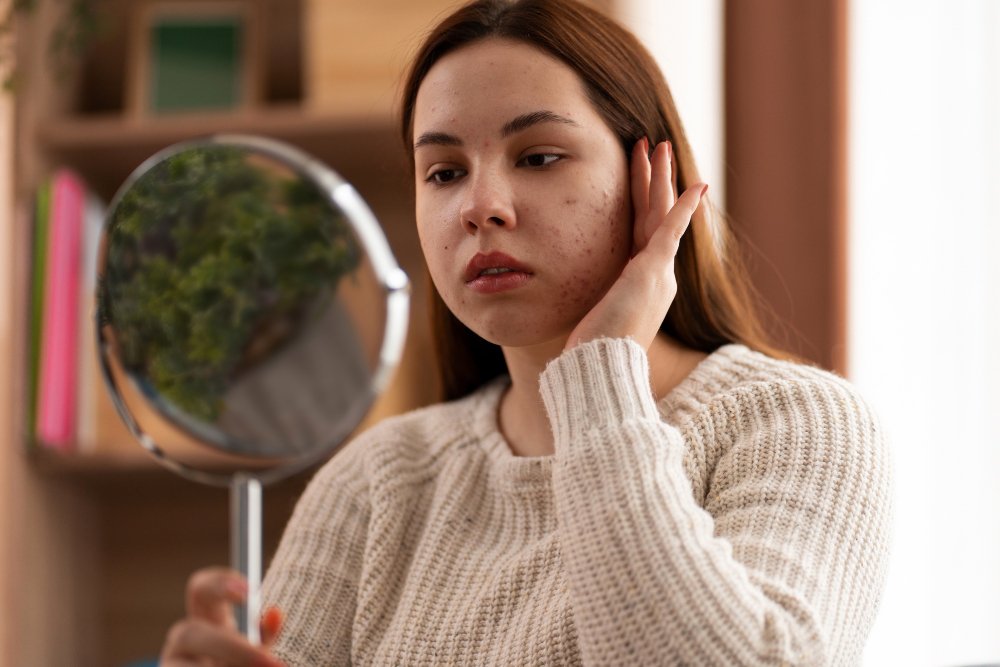
Introduction: The Link Between Stress, Cortisol, and Skin Health
Many people notice changes in their skin during stressful times. In fact, the connection between stress and skin is real. Stress causes your body to release a hormone called cortisol. This hormone can affect your skin in many ways. For example, it can trigger acne and speed up signs of aging. Understanding how stress and skin health are linked can help you take better care of yourself.
What is Cortisol?
Cortisol is a hormone made by your adrenal glands. These glands sit on top of your kidneys. Cortisol helps your body respond to stress. It also controls blood sugar, reduces inflammation, and helps with energy. However, too much cortisol for a long time can harm your body and skin.
How Stress Raises Cortisol Levels
When you feel stressed, your brain sends a signal to your adrenal glands. As a result, they release cortisol into your blood. This is called the “fight or flight” response. While this response helps you react quickly in danger, ongoing stress keeps cortisol levels high. Over time, high cortisol can cause problems for your skin and overall health.
Cortisol and Acne
High cortisol levels can make your skin produce more oil. Because of this, your pores can get clogged. Bacteria can then grow, leading to acne breakouts. In addition, stress can slow down skin healing. So, pimples may last longer or become more severe. Many people notice more acne during exams, work deadlines, or family stress.
Cortisol and Skin Aging
Besides acne, cortisol can also speed up skin aging. For instance, high cortisol breaks down collagen and elastin. These are proteins that keep your skin firm and smooth. Without enough collagen, your skin may develop wrinkles and lose its bounce. Over time, you may notice sagging, fine lines, and dullness. This process is often called stress-induced aging.
Symptoms and Signs: How Stress Affects Skin
Stress and skin problems often appear together. You may notice:Acne breakouts or worsening of existing acneDry, flaky, or itchy skinRedness or rashesIncreased oilinessFine lines and wrinkles appearing soonerLoss of skin firmness or elasticitySlower healing of cuts or pimples
Sometimes, stress can also trigger skin conditions like eczema or psoriasis.
Diagnosis: How Professionals Identify Stress-Related Skin Issues
Doctors and dermatologists look at your skin and ask about your health and stress levels. They may ask questions about your daily life, sleep, and recent changes. Sometimes, they check for other causes, like allergies or infections. In rare cases, blood tests may be used to check hormone levels. However, most stress-related skin problems are diagnosed by your symptoms and history.
Treatment and Management: Reducing Cortisol and Improving Skin Health
There are many ways to treat stress-related skin issues. Treatment often includes:Topical creams or gels for acne or rashesMoisturizers to soothe dry or irritated skinMedications if needed, prescribed by a doctorStress management techniques, such as deep breathing or meditationRegular exercise, which can lower stress and improve skinHealthy sleep habitsBalanced diet rich in fruits, vegetables, and water
In addition, talking to a mental health professional can help you manage stress better. According to the CDC and WHO, a healthy lifestyle supports both your mind and skin.
Prevention Tips: Protecting Your Skin from Stress
While you cannot avoid all stress, you can take steps to protect your skin. Try these tips:Practice relaxation daily, such as yoga or deep breathingKeep a regular sleep scheduleEat a balanced diet with plenty of waterLimit caffeine and sugar, which can worsen stressUse gentle skin care productsWash your face twice a dayTake breaks and spend time outdoors
Moreover, staying connected with friends and family can boost your mood and lower stress.
When to See a Specialist
If your skin problems do not improve with home care, it may be time to see a dermatologist. You should also seek help if you notice:Severe or painful acneSudden changes in your skinSigns of infection, such as pus or feverSkin issues affecting your daily life or self-esteem
Sometimes, stress can also cause emotional symptoms. If you feel overwhelmed, anxious, or sad, consider talking to a healthcare provider.
Consult Dr. Fathima Mohammed for personalized advice on managing stress and skin health.